Here is everything you need to know about Google's newly launched TurboQuant. This algorithmic suite and library introduces advanced quantization and compression techniques tailored for large language models (LLMs) and vector search engines—key components of retrieval-augmented generation (RAG) systems. Explore the questions below to understand its purpose, benefits, and impact.
What is TurboQuant?
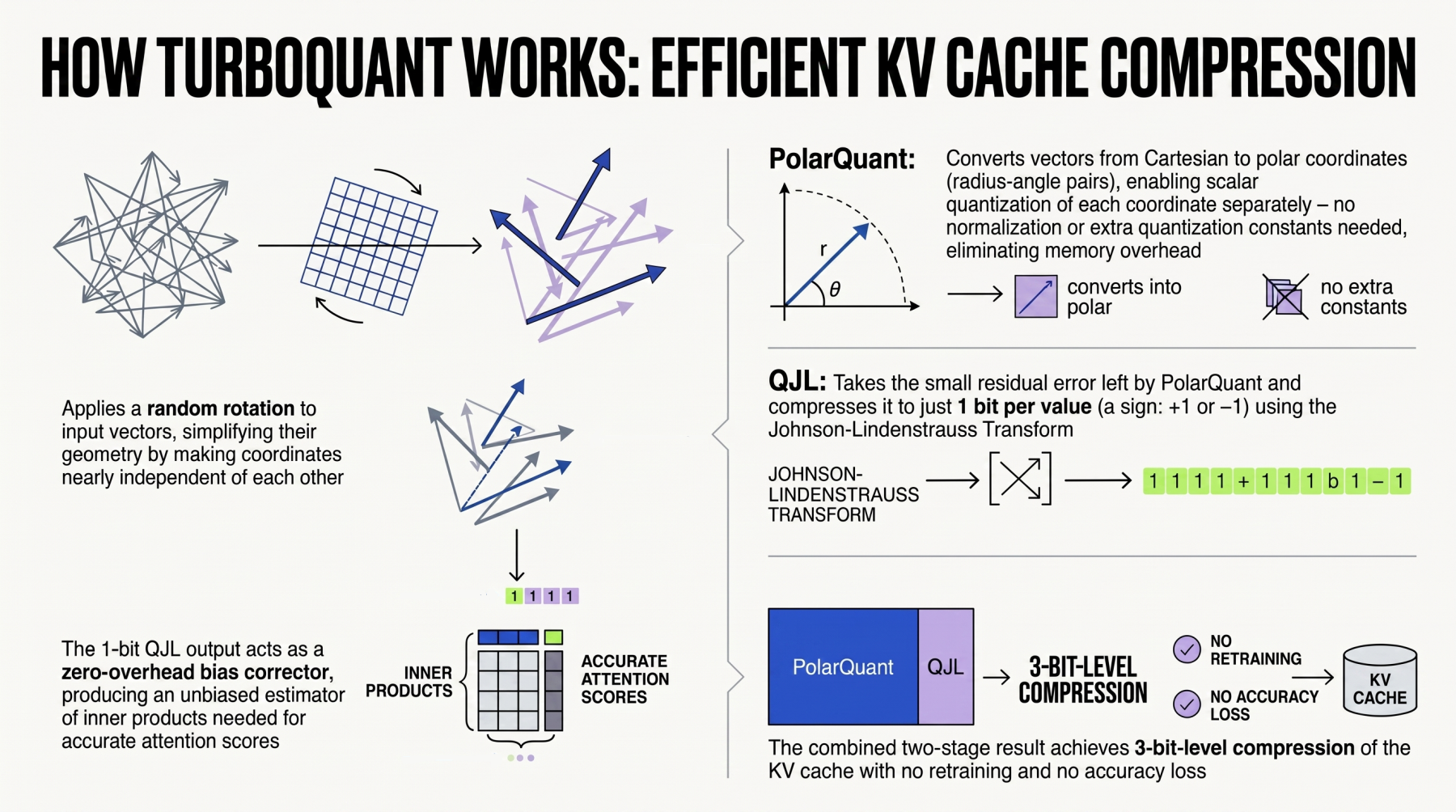
TurboQuant is a novel algorithmic suite and library recently launched by Google. It specializes in applying advanced quantization and compression methods to large language models (LLMs) and vector search engines. These techniques reduce the memory and computational footprint of models and indexes without sacrificing accuracy. TurboQuant is designed to work seamlessly with modern AI pipelines, enabling more efficient deployment of LLMs and vector-based retrieval systems, which are fundamental to retrieval-augmented generation (RAG) architectures.
Who developed TurboQuant and why?
TurboQuant was developed by Google's research and engineering teams. The goal was to address the growing need for efficient model inference and index storage in production environments. As LLMs and vector search engines become larger and more complex, their resource demands can hinder deployment, especially on edge or cost-sensitive platforms. Google created TurboQuant to provide a unified, open-source solution that makes state-of-the-art quantization and compression techniques accessible to the entire AI community, helping to democratize high-performance AI.
How does TurboQuant help large language models?
TurboQuant applies quantization to LLMs, reducing the precision of model weights and activations—for example, from 32-bit floating point to 8-bit integers. This dramatically decreases model size and speeds up inference, making LLMs run faster and use less energy. TurboQuant's algorithms are designed to preserve model accuracy by optimally mapping high-precision values to lower-bit representations, minimizing information loss. This allows LLMs to be deployed on a wider range of hardware, including mobile devices, without compromising performance on tasks like text generation, summarization, and question answering.
How does TurboQuant benefit vector search engines?
Vector search engines rely on high-dimensional embeddings to find relevant documents or items. These embeddings can consume significant memory. TurboQuant compresses these vectors by quantizing them, reducing storage requirements by up to 4x while maintaining retrieval accuracy. This is especially valuable for RAG systems, where large corpora of indexed vectors must be searched in real time. By lowering memory footprint, TurboQuant enables scaling to billions of vectors on affordable hardware, improving response times and reducing operational costs.
What role does TurboQuant play in RAG systems?
Retrieval-augmented generation (RAG) systems combine a retrieval component (usually a vector search engine) with a generative LLM. Both parts can be resource-intensive. TurboQuant optimizes both: it compresses the LLM for faster, cheaper generation, and it reduces the size of the vector index for quicker, less memory-hungry retrieval. This makes end-to-end RAG pipelines more practical for real-world applications, such as chatbots, question answering, and enterprise search. By lowering latency and cost, TurboQuant helps RAG systems operate at scale without sacrificing quality.
When and how can developers access TurboQuant?
TurboQuant was recently launched by Google and is available as an open-source library on platforms like GitHub. Developers can integrate it into their existing machine learning frameworks (e.g., TensorFlow, PyTorch, JAX) and apply its quantization tools to their own LLMs and vector databases. Google provides documentation, examples, and benchmark results to help users adopt TurboQuant quickly. The library is designed to be modular, allowing users to choose specific quantization techniques or apply the full suite for maximum compression.