The Coordinated Campaign Against Wind Power
Across the globe, a well-funded and organized effort is underway to discredit wind energy. Reports from major outlets like the Financial Times describe it as a presidential crusade against renewable energy, while industry groups such as WindEurope warn that these attacks pose a systemic risk to Europe's energy security. The narrative often paints wind turbines as inefficient, harmful to wildlife, or visually intrusive—but a closer look reveals that many of these claims are based on misconceptions or outright misinformation.
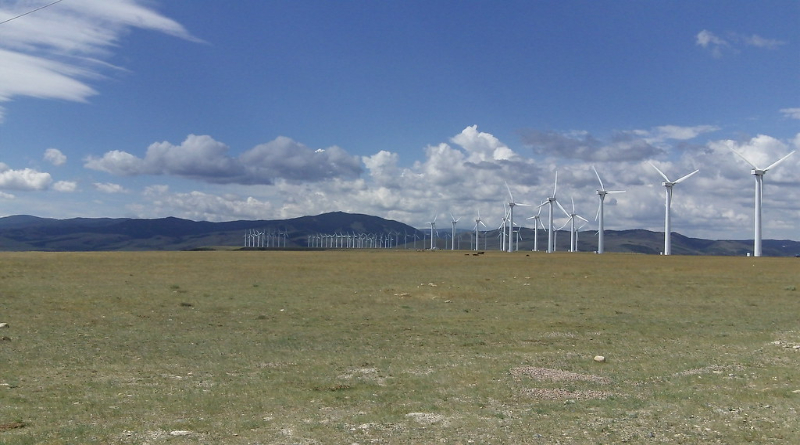
This campaign isn't limited to one country. It's a coordinated push that influences public opinion, policy decisions, and investment flows. Understanding why this push is fundamentally flawed requires a basic appreciation of how wind power actually works—and its deep roots in the same energy source that powers our planet: the sun.
Wind Energy: A Derivative of Solar Power
At its core, wind is simply moving air caused by uneven heating of the Earth's surface by the sun. When sunlight warms the ground, the air above it rises, and cooler air rushes in to fill the gap—creating wind. Thus, every time a wind turbine spins, it is harvesting solar energy that has been temporarily stored in the atmosphere.
This makes wind power a form of indirect solar energy, just like hydropower (which relies on solar-driven evaporation and precipitation) or biomass (which uses sunlight for photosynthesis). The only difference is the mechanism: instead of capturing photons directly with photovoltaic cells, we capture the kinetic energy of air movement resulting from solar heating.
In fact, the total energy available in wind globally is vast—many times greater than current human energy consumption—and it is constantly replenished by the sun's daily cycle. Attacking wind power as an inefficient or unreliable energy source ignores this fundamental connection. If we accept solar energy as clean and abundant, then wind energy, its atmospheric cousin, deserves the same consideration.
The Environmental and Economic Case for Wind
Wind power already provides significant environmental benefits. According to data from the Global Wind Energy Council, each megawatt-hour of wind-generated electricity avoids roughly 0.8–1.0 tonnes of CO₂ emissions compared to coal-fired power. In 2023 alone, wind energy helped avoid over 1.2 billion tonnes of carbon dioxide globally—equivalent to taking 260 million cars off the road.
Economically, the costs of wind energy have dropped dramatically. Onshore wind is now one of the cheapest sources of new electricity generation, often costing between $30–60 per megawatt-hour, well below the cost of coal or natural gas. Offshore wind is also becoming more competitive as technology improves.
Furthermore, wind farms create jobs. The U.S. wind sector employs over 120,000 people, and Europe's wind industry supports more than 300,000 jobs. These are not just construction jobs; they include high-skilled roles in engineering, data analysis, maintenance, and manufacturing.
Addressing Common Criticisms
Opponents of wind power often raise three main objections: bird mortality, noise, and intermittency. Each deserves a factual response.
- Bird mortality: While turbines do kill some birds, the number is far lower than that caused by building collisions, domestic cats, or fossil fuel operations. According to the U.S. Fish and Wildlife Service, wind turbines account for less than 0.01% of human-caused bird deaths. Moreover, new technologies like radar-based shut-off systems are reducing even that small impact.
- Noise: Modern wind turbines are much quieter than older models. At a distance of 300 meters, the sound level is typically below 45 decibels—comparable to a quiet refrigerator. Numerous studies have found no direct link between wind turbine noise and health problems, though proper siting is important to avoid annoyance.
- Intermittency: Wind doesn't blow all the time, but neither does the sun shine 24/7. Grid operators manage variability through forecasting, energy storage, geographic diversification, and complementary renewable sources. When combined with solar, batteries, and hydro, wind power becomes a reliable part of a stable grid—as demonstrated by countries like Denmark, which gets nearly 50% of its electricity from wind.
Conclusion: A Unified Renewable Future
The campaign against wind power is not just misguided—it is scientifically inconsistent. Wind energy is solar energy in motion, a natural and abundant resource that can help decarbonize our electricity system at low cost and with minimal environmental impact. The attacks on wind are often driven by political ideology or vested interests in fossil fuels, not by genuine concern for efficiency or ecology.
Instead of pitting one renewable technology against another, we should recognize that solar and wind are complementary tools in the same toolbox. The sun provides the energy; wind helps distribute it. A sensible energy policy will embrace both, along with storage and other clean technologies, to build a resilient and sustainable power system for the future. The real threat to our security is not wind turbines—it's the delay caused by these unfounded attacks.