After years of anticipation and delays, Tesla has officially commenced high-volume production of its all-electric Semi truck at Gigafactory Nevada. The company shared a photo on its official Tesla Semi X account, showing the first truck rolling off the assembly line at a dedicated 1.7-million-square-foot facility. This milestone marks a critical step forward for the electric truck program, which aims to revolutionize freight transport with zero-emission, long-range capabilities. Let’s dive into the key details surrounding this announcement through a series of questions and answers.
What is the significance of Tesla announcing the first Semi off the high-volume production line?
This announcement signals that Tesla has moved beyond pilot production and is now scaling up to meet commercial demand. The first truck from the dedicated high-volume line at Gigafactory Nevada represents a crucial validation of the company’s manufacturing processes. Previously, Tesla had only built a limited number of Semis using lower-volume methods. Achieving high-volume production means the company can now fulfill orders for customers like PepsiCo, which has been testing pre-production units. The milestone also addresses investor concerns about Tesla’s ability to deliver on its promises, as the Semi program faced multiple delays since its 2017 unveiling.
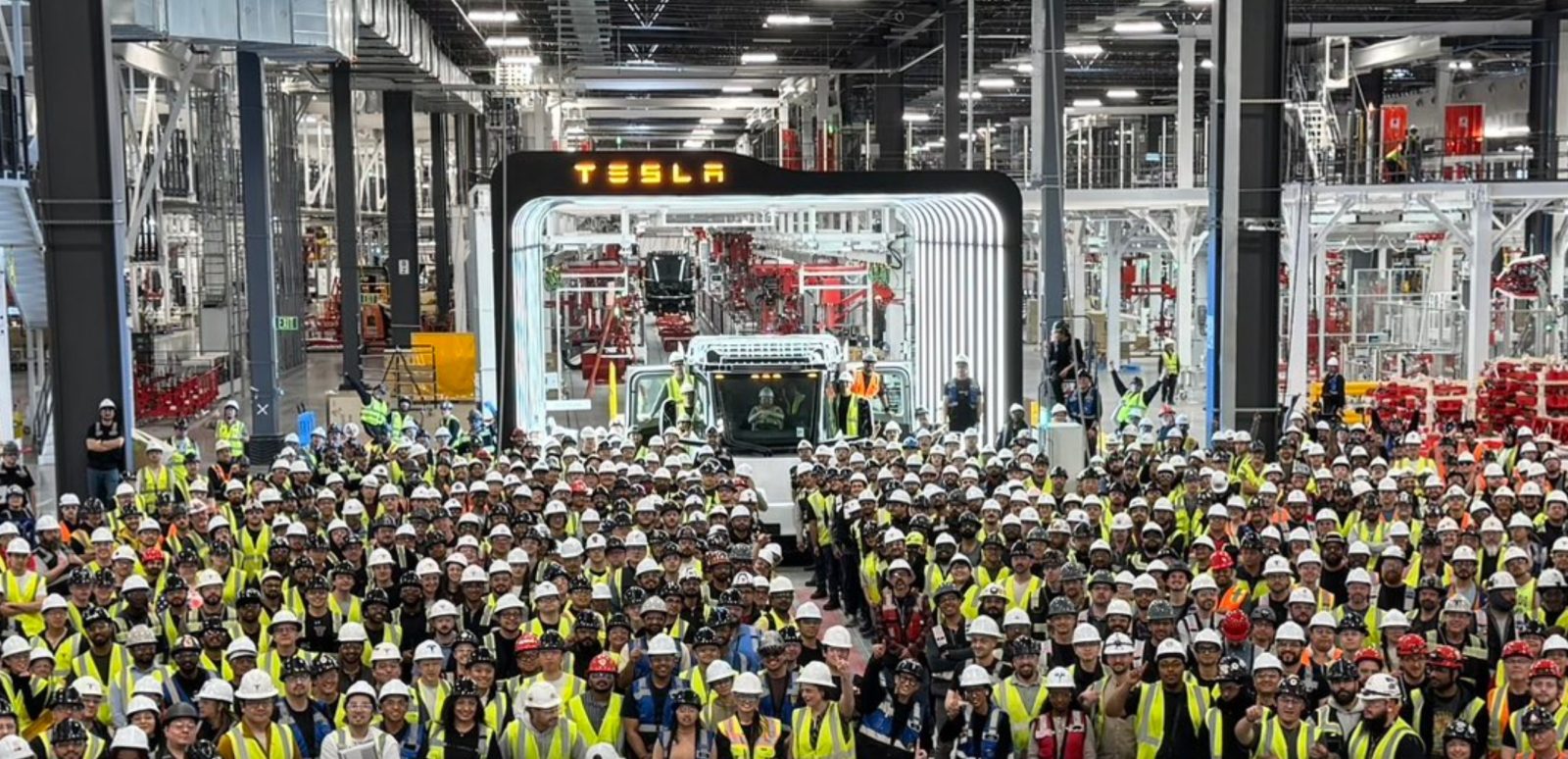
Where is the Tesla Semi being built and what makes the factory special?
The Tesla Semi is being manufactured at Gigafactory Nevada, specifically in a newly built 1.7-million-square-foot facility. This factory was designed exclusively for Semi production and includes advanced automation and assembly lines tailored to the truck’s unique design. Located near Reno, Nevada, the Gigafactory already produces batteries and powertrains, allowing for integrated supply chain efficiencies. The size of the facility is comparable to multiple football fields, indicating Tesla’s commitment to ramping up production capacity. This dedicated space allows Tesla to control quality and throughput, which is critical for a vehicle that must meet rigorous commercial trucking standards.
How does the Tesla Semi perform in terms of range and capability?
While Tesla has not yet released final specifications for the production version, earlier claims stated a range of up to 500 miles on a single charge when fully loaded. The Semi is designed to handle Class 8 trucking duties, meaning it can pull heavy loads up to 80,000 pounds. It features a low center of gravity due to its battery pack placement, which enhances stability and safety. The truck also supports Tesla’s Megacharging network, enabling rapid recharging at dedicated stations. In real-world tests, pre-production models have demonstrated impressive efficiency, and the volume-production units are expected to maintain or exceed these benchmarks. Key customers like PepsiCo have validated the Semi’s performance in fleet operations.
What delays did the Tesla Semi program face before this milestone?
The Tesla Semi was first unveiled in November 2017 with a planned production start in 2019. However, the program experienced multiple setbacks due to battery supply constraints, production complexities, and global chip shortages. Tesla shifted focus to other models like the Model Y and Cybertruck, while also prioritizing battery production for the Semi. The company repeatedly pushed back production dates, with initial deliveries of “Pilot” units starting only in 2022. These early units were hand-built in smaller quantities. The high-volume line launch thus represents a long-awaited breakthrough after nearly six years of development and testing.

Who are the key customers for the Tesla Semi?
Major fleet operators have placed orders for the Tesla Semi, with PepsiCo being the most prominent. PepsiCo has been testing pre-production Semis in California for regional deliveries and has publicly praised the truck’s performance. Other notable customers include UPS, FedEx, Walmart, and DHL, all of whom have reserved units. The interest from large logistics companies underscores the potential of electric trucks to reduce operating costs and carbon emissions. Tesla’s announcement is likely to accelerate deliveries to these early adopters, who have been waiting for production to scale. The volume production line ensures that Tesla can now fulfill these reservations systematically.
How does the Tesla Semi compare to other electric trucks on the market?
The Tesla Semi competes with electric trucks from manufacturers like Volvo, Freightliner, and Nikola. However, Tesla’s advantage lies in its vertical integration—producing its own batteries, motors, and software. The Semi boasts a drag coefficient of just 0.36, making it the most aerodynamic heavy truck on the road. This efficiency translates into longer range compared to rivals like the Freightliner eCascadia (250 miles) or Volvo VNL Electric (275 miles). While others offer lower upfront costs, Tesla’s total cost of ownership is projected to be lower due to energy savings and reduced maintenance. The Semi’s capacity for continuous over-the-air software updates also gives it a long-term edge.
What challenges might Tesla face with high-volume production of the Semi?
Scaling production of a heavy-duty electric truck presents unique challenges. Battery supply remains a bottleneck: each Semi requires a large battery pack (likely over 800 kWh), which consumes significant cell output. Tesla must also build out the Megacharging infrastructure to support fleet operations. Additionally, the Semi’s components differ from passenger cars, requiring specialized supplier networks. Quality control is paramount, as a failure in a commercial truck can have severe consequences. Finally, Tesla must manage regulatory approvals across states and countries. While Gigafactory Nevada’s dedicated line mitigates some risks, the company has a history of production ramp issues that could affect delivery timelines.