Quick Facts
- Category: Science & Space
- Published: 2026-05-01 14:13:11
- AI Agent Identity Theft Crisis: Zero-Knowledge Architecture Emerges as Critical Defense
- Upcoming Linux 7.2 Kernel: Fair Scheduler and AMD AIE4 Support
- Rustup 1.29.0 Boosts Performance with Concurrent Downloads and Unpacking – Major GSoC 2025 Achievement
- How to Get Ready for the Next Generation of iPads: A Rumour-Based Preparation Guide
- A Look at EtherRAT Distribution Spoofing Administrative Tools via GitHub Facades
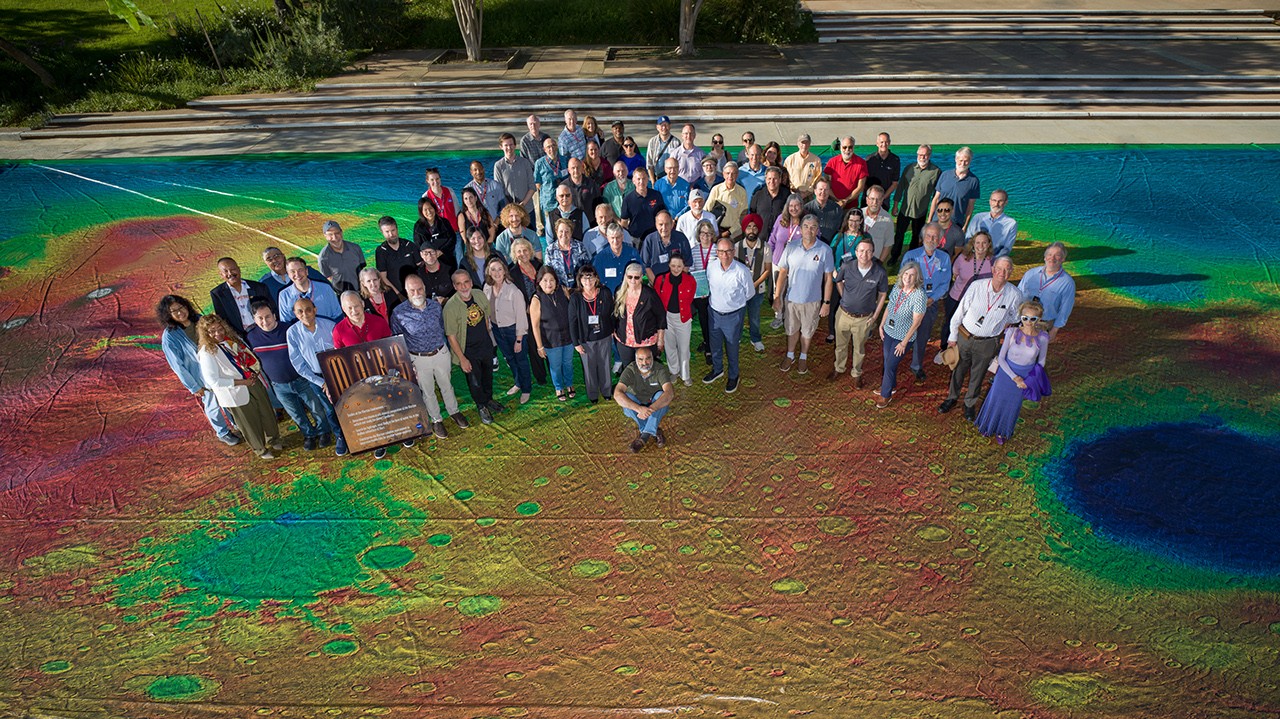
Twenty-five years ago, on April 7, 2001, NASA launched the 2001 Mars Odyssey orbiter, beginning a journey that would rewrite our understanding of the Red Planet. On April 15, 2026, the mission team gathered at NASA's Jet Propulsion Laboratory (JPL) in Southern California to mark this incredible anniversary. The centerpiece of the celebration was a massive global map of Mars, constructed from images captured by Odyssey's THEMIS infrared camera. This list explores ten key milestones that define Odyssey's lasting legacy.
1. The Launch and Mission Overview
The 2001 Mars Odyssey orbiter launched on April 7, 2001, from Cape Canaveral Air Force Station. Its primary goal was to study the Martian surface and atmosphere, searching for evidence of past or present water and ice. The mission was named in honor of Arthur C. Clarke's novel 2001: A Space Odyssey, symbolizing humanity's quest for knowledge. Odyssey arrived at Mars on October 24, 2001, after a six-month journey. Since then, it has orbited the planet tens of thousands of times, providing invaluable data that has shaped our understanding of Martian geology, climate, and potential habitability.
2. THEMIS: The Thermal Emission Imaging System
At the heart of Odyssey's scientific success is THEMIS (Thermal Emission Imaging System), a multi-wavelength infrared camera developed by Arizona State University. THEMIS captures images at nine different infrared wavelengths, allowing scientists to identify minerals such as silicates, carbonates, and sulfates. It also takes visible-light photos at five wavelengths, creating high-resolution surface maps. Over the years, THEMIS has revealed ancient riverbeds, volcanic deposits, and layered rock formations. Its global coverage has been essential for constructing the massive map unveiled during the anniversary celebration, which combines thousands of individual images into a seamless mosaic.
3. Building a Global Map of Mars
The team used THEMIS data to assemble a comprehensive global map of Mars, which was displayed at the anniversary event. This map covers the entire planet at a resolution of 100 meters per pixel, making it one of the most detailed thermal infrared maps ever created. Each pixel represents surface temperature variations, which correlate with different rock and soil types. Scientists can use the map to study the distribution of water ice, dust, and rock formations. The project required stitching together thousands of images taken over many years, ensuring seamless coverage even over the poles and dusty regions.
4. The 25-Year Celebration Event on April 15, 2026
On April 15, 2026, current and former members of the Odyssey team gathered at JPL to mark the orbiter's 25th launch anniversary. The highlight was the unveiling of the giant global map, which stretched across a large room. Speeches praised the dedication of engineers, scientists, and support staff who kept the spacecraft operating far beyond its original design life. Attendees included veterans from the early 2000s as well as young engineers who joined later. The event also featured a live feed from Odyssey's current data stream, showing real-time temperature readings from the Martian surface.
5. Team Members Past and Present
Odyssey's longevity is a testament to its team. Over 25 years, hundreds of scientists, engineers, and project managers have contributed to the mission. Many have spent their entire careers on Odyssey, transitioning from early-career roles to leadership positions. The April 2026 celebration brought together retirees and active staff, sharing memories of launch countdowns, software updates, and scientific breakthroughs. Team members also paid tribute to those who passed away, emphasizing the community's collaborative spirit. The gathering highlighted how Odyssey has fostered intergenerational expertise in planetary exploration.
6. Odyssey's Scientific Discoveries
Odyssey has made groundbreaking discoveries that changed our view of Mars. In 2002, it detected vast amounts of hydrogen, likely in the form of water ice, just beneath the surface of the Martian poles. This finding revolutionized the search for life and resources. The orbiter also identified the presence of chlorides (salt deposits) and sulfates, indicating that liquid water once existed on the planet. Its thermal data helped create global weather maps and monitor seasonal changes. Odyssey also served as a communications relay for rovers like Spirit, Opportunity, Curiosity, and Perseverance, bridging the gap between Earth and Mars.
7. Endurance and Longevity: 25+ Years in Orbit
Designed for a two-year primary mission, Odyssey has now operated for over 25 years—a remarkable feat for any spacecraft. Its durability results from robust engineering and regular software updates. The orbiter has withstood solar flares, cosmic radiation, and the harsh Martian environment. In 2026, it remains functional, though some instruments have degraded. Its longevity allows scientists to observe long-term trends in Martian weather and surface changes. Odyssey's continued operation provides a valuable baseline for newer missions, and its data rich archive continues to fuel research worldwide.
8. The Global Map as a Scientific Resource
The global map unveiled at the celebration isn't just a pretty picture—it's a powerful scientific tool. Researchers can use it to identify regions of interest for future landers or rovers, such as areas with exposed ice or unique mineral deposits. The map also helps in planning astronaut missions by locating potential resources like water ice. Educational groups have used it to teach planetary geology. The detailed thermal data allows scientists to study night and day temperature differences, revealing grain size and rock abundance. As new data flows in, the map is periodically updated, ensuring it remains a living document.
9. Future Plans for Odyssey
Even after 25 years, Odyssey's mission isn't over. NASA plans to continue operating the spacecraft for the foreseeable future, as long as it remains healthy. The team is developing new software to extend its capabilities, including improved data compression and autonomous operation. Odyssey will continue to serve as a communications relay for Mars rovers and potentially for sample return missions. Scientists are also exploring ways to use THEMIS to monitor dust storms and seasonal frost cycles. Each additional year of data increases the value of the long-term climate record.
10. Legacy of the 2001 Mars Odyssey Mission
Odyssey's legacy extends far beyond its hardware. It demonstrated that long-duration orbital missions are vital for understanding planetary evolution. Its data has been cited in thousands of scientific papers, and its maps are used by NASA to plan every major Mars mission. The orbiter also inspired a new generation of planetary scientists and engineers. The 25-year celebration at JPL reminded everyone that space exploration requires patience, teamwork, and passion. As humanity prepares to send astronauts to Mars, Odyssey's achievements will guide the way—a true odyssey of discovery.
From its launch in 2001 to the global map celebration in 2026, NASA's Mars Odyssey orbiter has proven that endurance and ingenuity can unlock the secrets of another world. Its 25-year journey is a testament to the human spirit of exploration. As the spacecraft continues its silent orbit, it remains a beacon of what we can achieve when we reach for the stars.