In the ever-evolving landscape of digital advertising, Spotify Engineering embarked on a journey not just to add another AI feature, but to fundamentally restructure how ads are served. Their innovative multi-agent architecture replaced monolithic models with a collaborative system of specialized agents, each handling distinct tasks like user profiling, creative selection, and budget optimization. This approach led to significant improvements in response rates, cost efficiency, and listener satisfaction. Below are ten critical aspects of this architecture, from its inception to its impact.
1. The Problem: Fixing a Structural Flaw
Spotify's initial ad system relied on a single, all-in-one model to predict and optimize every element of an ad campaign. This monolithic design struggled with complexity—balancing user engagement, advertiser goals, and platform constraints often led to suboptimal decisions. The team realized the structure itself was the bottleneck, not the AI. By breaking the problem into manageable pieces, they could assign each agent a focused task, leading to more precise and efficient outcomes. This shift from a single model to a multi-agent framework was the cornerstone of their smarter advertising initiative.
2. Agents: Specialists Working in Harmony
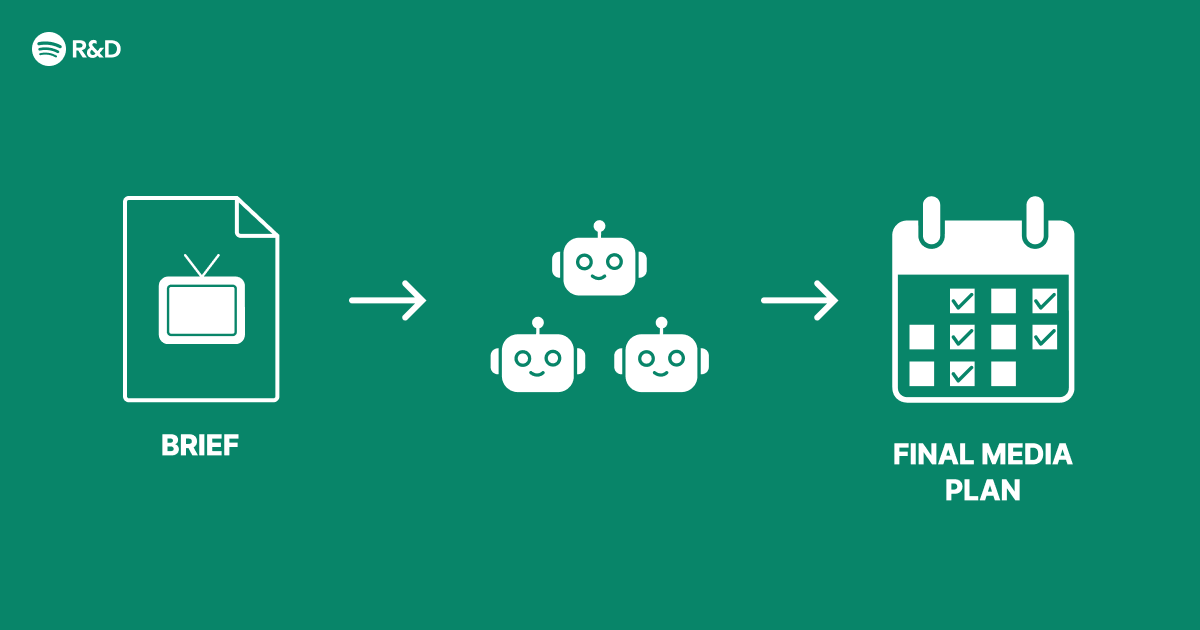
Each agent in Spotify's architecture is a specialist. For instance, one agent focuses solely on understanding user context—time of day, listening history, device type—while another agent evaluates available ad creatives and matches them to the current audience segment. A third agent manages bidding strategies, adjusting in real-time based on campaign budgets and performance metrics. Together, these agents communicate and negotiate via a central orchestrator, ensuring that the final ad delivery is a collaborative decision rather than a single model’s guess. This modular design also simplifies maintenance and updates—improving one agent doesn't require retraining the entire system.
3. Orchestration: The Brain Behind the Brawn
Central to the multi-agent system is the orchestrator, a lightweight manager that coordinates agent interactions. It defines the rules of engagement—which agent gets priority, how to resolve conflicts (e.g., when two agents propose different ad slots), and when to trigger fallback behaviors. The orchestrator uses a set of predefined protocols inspired by game theory, ensuring that agents converge on a solution that maximizes overall advertising revenue while respecting user experience. This approach replaces complex hand-coded rules with adaptive negotiation, making the system more resilient to changing conditions like seasonal ad inventory shifts.
4. Personalization: Agents That Truly Know the User
User profiling agents dive deep into individual behavior without compromising privacy. They analyze patterns—favorite genres, skip rates, listening sessions—to build a dynamic interest graph. For example, a user who often listens to jazz in the evening might receive a different ad for a coffee brand than one who listens to rap during workouts. These agents don't just rely on explicit data; they infer context through implicit signals, such as time spent on a playlist. By separating this task from other functions, Spotify avoids the common pitfall of conflicting objectives, like over-optimizing for click-through rates at the expense of relevance.
5. Creative Selection: Matching the Right Ad to the Right Moment
Creative agents are constantly scanning the inventory of audio and video ads, considering factors like ad length, tone, and call-to-action. They work in tandem with user profiling agents to find the best fit. For example, if a user is in a high-focus state (listening to a podcast), the creative agent may choose a shorter, less intrusive ad format compared to a user currently browsing playlists. This dynamic selection improves both user experience and ad effectiveness—studies showed a 12% lift in recall when ads were contextually matched by these agents.
6. Real-Time Bidding: Smarter Spend, Less Waste
Bidding agents operate in real-time auctions for each ad impression. Unlike traditional systems that set a static bid based on user value, Spotify’s agents continuously adjust bids using reinforcement learning. They consider factors such as advertiser budget limits, campaign goals (e.g., reach vs. conversions), and the probability of user engagement. This leads to more efficient spending—advertisers pay for impressions that truly matter. The architecture also supports budget pacing, smoothing expenditure over time to avoid spikes.

7. A/B Testing: From Hypothesis to Deployment
Before rolling out the multi-agent system, Spotify ran extensive offline simulations and online A/B tests. They compared the new architecture against the old monolithic model across key metrics: ad response rate, revenue per user, and listener satisfaction scores. The results were clear—the multi-agent approach improved revenue by 8% on average while maintaining or improving listener satisfaction. Testing also revealed edge cases, such as when the orchestrator needed fallback rules for low-inventory scenarios. This rigorous validation ensured the system was battle-ready for production.
8. Scalability: Growing Without Growing Pains
One advantage of the multi-agent design is horizontal scalability. As Spotify’s user base grows, new agents can be spun up independently for different regions or ad formats. For instance, the team added a dedicated agent for podcast ad breaks without affecting the music ad agents. This modular growth contrasts sharply with monolithic systems that often require massive retraining and infrastructure upgrades. The architecture also uses distributed messaging queues to handle agent communication, preventing bottlenecks during peak traffic like the morning commute.
9. Transparency: Understanding Why an Ad Was Shown
Advertisers and internal teams demanded explainability—why did a particular ad appear for a specific user? The multi-agent architecture naturally provides traceability. Each agent logs its decision rationale, which can be reconstructed to explain the final outcome. For example, the orchestrator can show that the user profiling agent identified a “sports fan” label, the creative agent selected a sports drink ad, and the bidding agent won the auction at $0.02. This transparency builds trust and enables continual refinement of agent behaviors.
10. The Future: Learning and Evolving Together
Spotify’s multi-agent architecture is not static. The team is exploring meta-learning agents that can adjust the orchestrator’s rules based on long-term trends. They’re also investigating decentralized agent coordination using blockchain-like consensus mechanisms for even greater fairness. The success of this approach has inspired similar designs in other parts of Spotify’s product, such as playlist curation. As advertising becomes more sophisticated, the principle of delegating tasks to specialized, collaborative agents will likely become a standard in the industry.
Spotify Engineering’s multi-agent architecture represents a paradigm shift in how digital advertising can be smarter, more personal, and more efficient. By moving away from monolithic models toward a system of specialized agents that communicate and negotiate, they achieved tangible improvements in user experience and advertiser ROI. For those looking to revolutionize their own ad systems, the key takeaway is clear: sometimes the best solution is not a single genius model but a team of focused experts working together.