A new report highlights that most Windows environments remain critically exposed due to reliance on static credentials and overly broad network access, with credentials often unchanged for months or years. HashiCorp has introduced an integrated approach using Boundary and Vault to address these vulnerabilities, providing direct, identity-based access without network-level exposure.
“The persistent use of shared local admin accounts, long-lived domain accounts, and static service passwords creates an open door for attackers,” said a security researcher at HashiCorp. “Even MFA can't fix a credential that never expires.” The solution combines credential management via Vault just-in-time provisioning with Boundary's per-session access brokering.
The Problem: Static Credentials Linger
Organizations still authenticate to Windows servers and workstations using shared local administrator accounts, long-lived domain accounts, service accounts with static passwords, and manually provisioned privileged credentials. Due to lack of automation, these credentials stay valid for extended periods—sometimes years—increasing exposure risk.
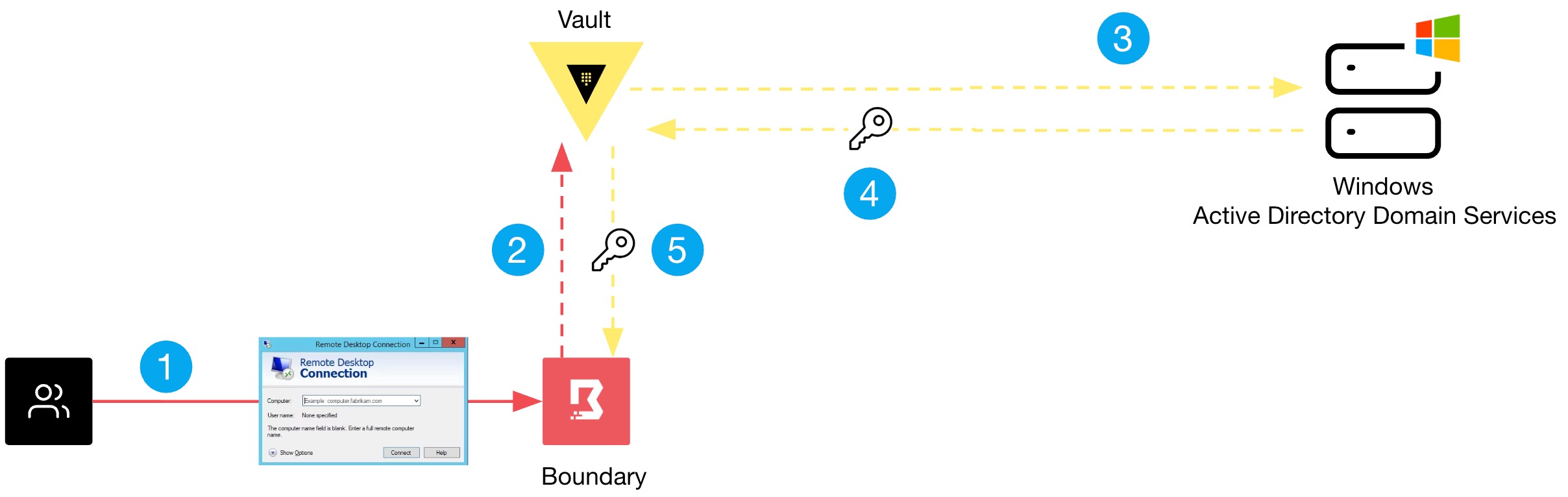
“In many Windows environments, shared accounts are used for RDP access, troubleshooting, and break-glass scenarios, making them a prime target for lateral movement,” warned a DevOps security analyst. Despite directory integrations and MFA, the underlying credential model remains fragile.
VPNs Fail at Identity-Based Access Control
Traditional VPNs secure the perimeter but rely on IP-based controls from firewalls and security groups. This approach is brittle in dynamic cloud environments where IPs are ephemeral and change frequently. “VPNs solve connectivity, not access control at the user-to-resource level,” noted the report.
Operational sprawl from deploying multiple tools for network segmentation further complicates management. Organizations need a solution that tackles both credential hygiene and granular access.
HashiCorp's Answer: Boundary + Vault
HashiCorp Boundary fundamentally changes the model by combining authentication and authorization onto a single platform. Instead of granting broad network access, it establishes a direct connection between a user and a target resource based on identity. Boundary also handles credential management on the user's behalf using Vault for just-in-time secrets.
“We've eliminated the need to ever share static passwords,” said a HashiCorp product manager. “Boundary can issue one-time or time-limited credentials, auto-rotating them after each session.” This reduces the attack surface and ensures credentials never persist.
Configuration Steps (for testing)
Users can deploy Boundary with a Vault credential store configured to manage Windows credentials. A quick-start guide provides steps to set up a target resource, define user roles, and initiate a session with dynamic secrets. HashiCorp recommends starting with a sandboxed environment to evaluate the integration.
Background
For years, Windows administrators have struggled with credential sprawl—shared accounts, infrequent rotation, and overprivileged access. Simultaneously, network perimeter defenses (firewalls, VPNs) failed to prevent lateral movement once inside. HashiCorp's Boundary (launched in 2020) and Vault (2015) have evolved separately, but this combined workflow addresses both pain points.
Industry surveys indicate that 70% of breaches involve privileged credential abuse. The new approach aligns with zero-trust principles: never trust, always verify, and grant least-privilege access per session.
What This Means
For CISOs and DevOps teams, this signals a shift away from legacy VPNs and static passwords toward ephemeral, identity-based access. By implementing Boundary and Vault, organizations can reduce the risk of credential theft and lateral movement without adding management complexity.
“We expect this to become the new standard for remote access in Windows-heavy enterprises,” commented an industry analyst. “It directly addresses two of the OWASP Top 10 vulnerabilities: broken authentication and security misconfiguration.” The approach also simplifies compliance audits, as all access is session-based and logged centrally.
Security teams should prioritize evaluating this workflow, particularly for high-risk environments like Active Directory servers, critical application servers, and jump boxes. The solution's ability to auto-rotate credentials after every session eliminates the static credential problem entirely.