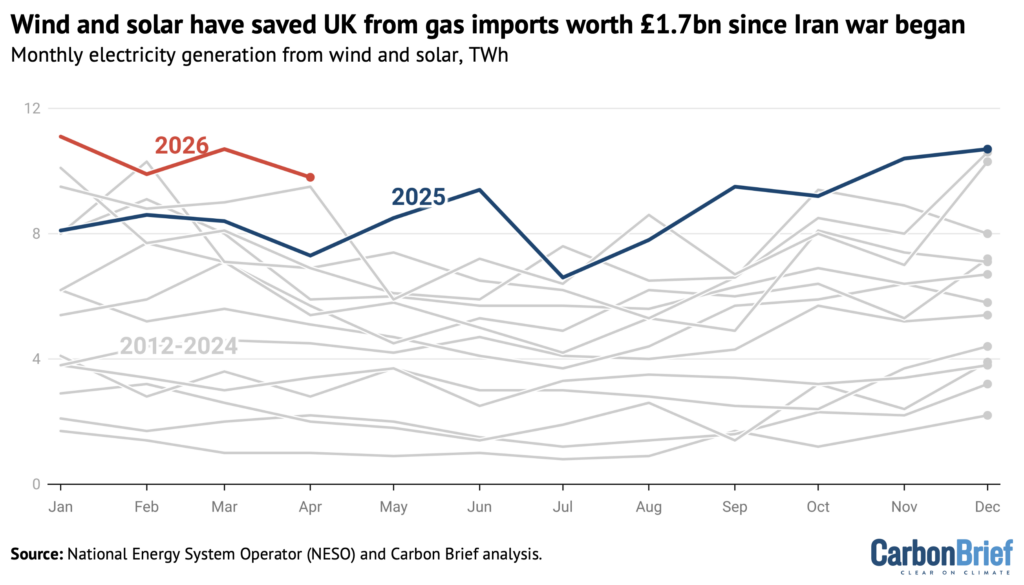
Welcome to our roundup of the most important climate-related stories from the first week of May 2026. From the European Union's controversial plan to exempt fossil-fuel companies from methane penalties, to a report showing wind and solar saved UK consumers £1.7 billion, and emerging research hinting at an Amazon rainforest tipping point, this listicle breaks down ten developments you need to know. Each item includes key facts and context, with internal links to related sections.
1. EU Considers Methane Exemption for Fossil-Fuel Firms
According to Politico, the European Commission is revising its landmark methane emissions regulation to allow national authorities to grant exemptions to oil and gas companies on energy security grounds. The draft guidelines, obtained by the outlet, would give the industry "leeway to avoid penalties" — a significant win for the sector. This move follows pressure from the Trump administration, which has intensified its opposition to the regulation. Critics argue the exemption undermines the EU's climate commitments, while supporters claim it ensures energy supply stability during global tensions.

2. Norway Approved Reopening of Three North Sea Gasfields
The Guardian reports that the Norwegian government has been heavily criticized for approving plans to reopen three North Sea gasfields that were closed nearly three decades ago. Officials justify the decision as necessary to "fill the gap in energy supplies created by the Middle East war." Additionally, Oslo has given the green light for oil and gas companies to explore 70 new locations across the North Sea, Barents Sea, and Norwegian Sea, sparking outrage from environmental groups who say it contradicts Norway's climate pledges.
3. Investors Pile into Clean-Power Funds at Fastest Rate in Five Years
The Financial Times reports that the Iran war is accelerating a global push for energy security, driving investors toward renewable energy funds. In April 2026 alone, more than £3 billion was poured into global clean-power funds, bringing their total net asset value to $43 billion. This surge — the fastest in five years — has boosted stocks linked to the energy transition, including solar, wind, and battery companies. Analysts say the conflict has underscored the risks of fossil-fuel dependence, making renewables a safer bet.
4. IMO Shipping Talks Get Back on Track for Emission Cuts
Carbon Brief reports that nations are now "back on track" to adopt a framework for curbing global shipping emissions, following the latest International Maritime Organization (IMO) meeting in London. The talks had stalled earlier this year, but new compromises have emerged. The framework is expected to include a carbon price and mandatory fuel standards, aiming to reduce the sector's greenhouse gas emissions by at least 50% by 2050 relative to 2008 levels. Shipping accounts for nearly 3% of global CO₂ emissions.
5. April Sea Temperatures Second Highest on Record, Raising El Niño Fears
The Financial Times highlights that global sea surface temperatures in April 2026 were the second highest ever recorded for that month, stoking concerns among scientists that a super El Niño may be brewing. If it materializes, this warming cycle could intensify extreme weather events worldwide, from floods to droughts. The record follows a multi-year La Niña phase and comes as ocean heat content remains at elevated levels due to climate change.
6. IRENA: Solar and Wind Plus Batteries Cheaper Than Fossil Fuels in Many Regions
A new report from the International Renewable Energy Agency (IRENA), covered by BusinessGreen, finds that solar and wind power combined with battery storage can deliver reliable, round-the-clock electricity at lower costs than fossil-fuel-dominated systems in a growing number of regions. The report provides a major boost for the argument that renewables can provide baseload power without backup from gas or coal, especially as battery prices continue to fall.
7. Deadly Floods and Landslides Hit Kenya
Al Jazeera reports that at least 18 people have died in floods and landslides triggered by heavy rains in Kenya. The extreme precipitation, linked to a changing climate and the potential onset of an El Niño, has displaced thousands and destroyed infrastructure. The Kenyan government has issued warnings for further heavy downpours in the coming days, raising fears of additional casualties.
8. Trees Lower Summer City Temperatures by 0.15°C on Average
Research published in Nature Communications reveals that trees in urban areas reduce summer temperatures by an average of 0.15°C globally. While this might seem small, the cooling effect is more pronounced in hotter climates and denser cities, potentially saving lives during heatwaves. The study underscores the importance of urban greening as a low-cost adaptation strategy for a warming world.
9. Microplastics and Nanoplastics May Contribute to Global Warming
A study in Nature Climate Change finds that airborne microplastics and nanoplastics can absorb sunlight and potentially contribute to atmospheric warming. These tiny particles, which are now pervasive in the environment, could have a direct radiative effect, similar to black carbon. The research adds a new dimension to the climate impacts of plastic pollution, urging policymakers to address plastic waste as part of climate mitigation.
10. Alaskan Mega Tsunami Linked to Glacial Retreat
Scientific analysis of a massive tsunami that struck Alaska in 2025 indicates that the event was "preconditioned by glacial retreat" driven by climate change. The tsunami, which caused significant damage, occurred when a landslide triggered by melting ice plunged into a fjord. Researchers warn that as glaciers continue to retreat, similar events could become more frequent in mountainous coastal regions worldwide.
Conclusion
These ten developments from the first week of May 2026 highlight the complex interplay of policy, investment, and natural systems in the climate crisis. From the EU's controversial methane exemption to the promise of cheaper renewables and the sobering signs of an Amazon tipping point, the stories underscore both progress and setbacks. As always, staying informed is the first step toward effective action. Bookmark this page for future updates, and explore the linked sections for deeper dives into each topic.