A dramatic increase in household rooftop solar and battery storage is reshaping Australia’s energy landscape, with the nation’s energy regulator stating that this shift makes the ambitious 82% renewables target far more attainable. The key insight? Distributed energy resources reduce the pressure on large-scale renewable projects, enabling a faster and more flexible transition.
The Regulator’s Fresh Take on the 82% Target
Australia’s energy regulator has described the boom in home batteries and photovoltaic (PV) panels as “mind-blowing,” noting that it fundamentally alters the pathway to the 82% renewable electricity goal by 2030. By lessening the reliance on massive wind farms and solar plants, the regulator argues that rooftop generation and storage can shoulder a greater share of the renewable load.
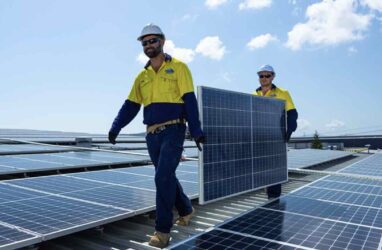
This perspective marks a significant departure from earlier assumptions that large-scale projects would do the heavy lifting. Instead, the regulator now sees distributed energy as a complementary – and in some ways more agile – resource that can be deployed quickly and without the lengthy approval processes typical of utility-scale infrastructure.
How Rooftop Solar Reduces the Burden on Big Projects
Every kilowatt-hour generated by a home system is one fewer that must come from a large solar farm or wind turbine. But the real insight is deeper: when millions of homes produce power during the day, it flattens the demand curve and eases strain on transmission networks. This means fewer new high-voltage lines and less storage needed at the utility scale.
The regulator notes that as rooftop PV penetration rises, the peak demand shifts to later in the evening – when solar fades. That’s precisely where home batteries come into play, storing excess daytime power for use after dark. This dynamic effectively creates a virtual power plant spread across suburbs, reducing the need for centralised peaking plants.
The Surge in Home Batteries: A Quiet Revolution
While rooftop solar has been growing steadily for years, the recent acceleration in battery adoption is what has caught the regulator’s attention. Installations have doubled in some regions, driven by falling prices, generous rebates, and the desire for energy independence. The combination of solar plus storage now allows households to use up to 80% of their own renewable generation, compared to about 30% without a battery.
Why Batteries Are a Game Changer for Grid Stability
Batteries do more than just shift solar power to evening hours. They can also provide frequency control and voltage support – services that are typically provided by large generators. Aggregated home batteries can respond in milliseconds to grid signals, helping to smooth out fluctuations caused by variable renewables. This capability reduces the need for expensive ancillary services from gas or coal plants.
Moreover, batteries reduce the phenomenon of “solar curtailment” – when excess solar generation during low-demand periods is wasted. Instead, that extra power is stored and discharged when needed, improving overall system efficiency.
What This Means for the 82% Renewables Target
The regulator’s new analysis suggests that with the current trajectory of rooftop solar and home battery uptake, the 82% target is achievable even if some large-scale projects are delayed or cancelled. This is a crucial insight given recent challenges facing big wind and solar farms, including community opposition, grid connection bottlenecks, and rising costs.

In essence, distributed energy acts as a buffer. If utility-scale renewable projects fall short, the shortfall can be partially offset by more rooftop generation and smarter use of storage. The regulator emphasizes that this does not mean we should abandon large projects, but rather that we have two parallel pathways to the same goal.
Challenges and Opportunities Ahead
While the outlook is promising, the regulator also points to hurdles that must be addressed to fully realise the potential of home solar and batteries.
Grid Integration and Reliability Concerns
Managing millions of small generators requires modernising distribution networks and updating market rules. Inverters must be smart enough to handle voltage fluctuations, and network operators need better visibility of rooftop generation. The regulator is working on standards that ensure home batteries can provide grid services without compromising safety.
Another challenge is equity. Currently, rooftop solar and batteries are more common in affluent suburbs and detached houses. To hit 82% renewables, uptake must extend to rental properties and apartment dwellers. Community batteries and shared solar programs are emerging as solutions.
Finally, the regulator warns that as more homes produce their own power, the remaining grid users may face higher fixed costs if the tariff structure isn’t reformed. Innovations like time-of-use tariffs and feed-in incentives will be critical.
Conclusion: A Dual‑Engine Approach to Renewables
The regulator’s “mind-blowing” assessment is a wake-up call: the home energy revolution is not just a consumer trend – it’s a strategic asset for Australia’s clean energy transition. By integrating rooftop solar and batteries into national planning, the 82% target becomes more robust and achievable.
As one official put it, “The line between ‘large-scale’ and ‘small-scale’ is blurring. They are two sides of the same renewable coin, and we need to treat them both as essential.”